

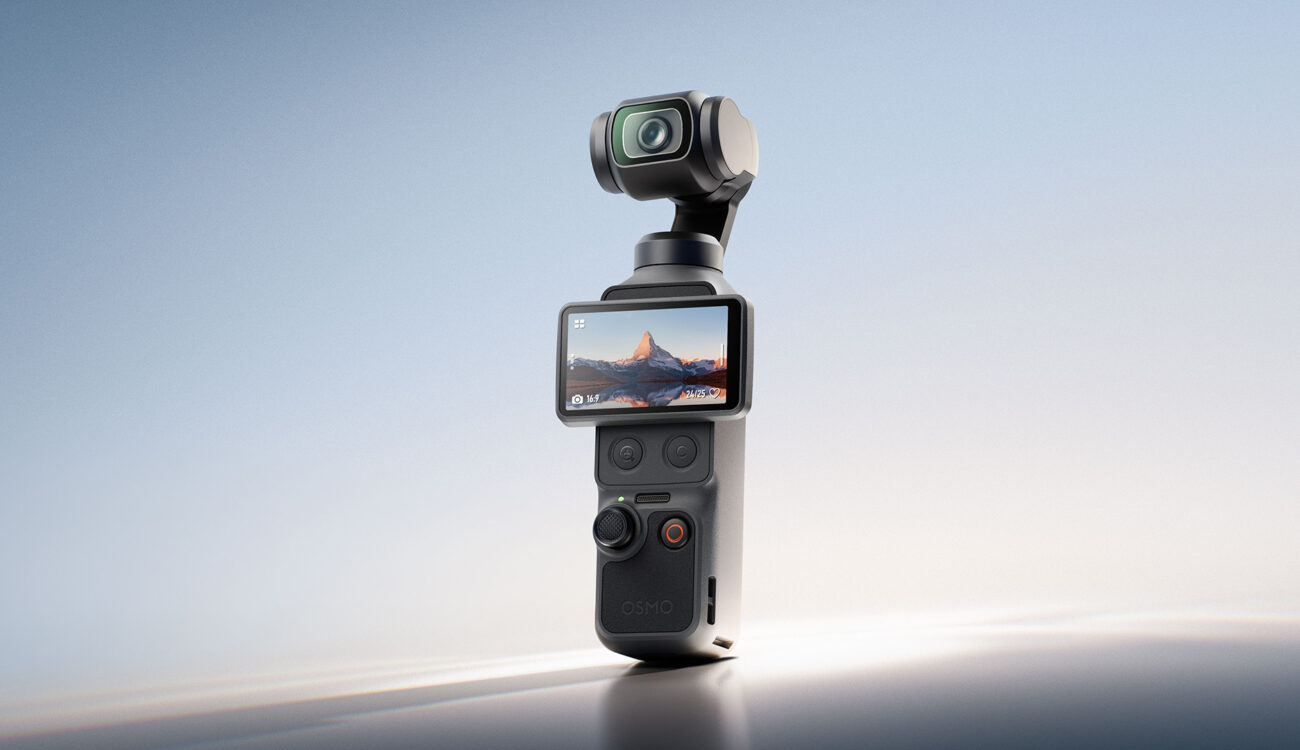
The most anticipated compact camera of 2026 just launched worldwide. For US creators, it might as well not exist.
April 17, 2026 — DJI officially unveiled the Osmo Pocket 4 on April 16, 2026, and by every technical measure it is the compact gimbal camera upgrade that content creators have been waiting for. A genuinely impressive spec sheet, a refined design that builds intelligently on the wildly popular Pocket 3, and a feature set that pushes into territory previously reserved for cameras two or three times its size. The global photography and filmmaking community responded with immediate enthusiasm.
American creators responded with immediate frustration.
DJI spokesperson Daisy Kong confirmed to The Verge that the Osmo Pocket 4 will not launch in the United States, stating that “the application for authorization is still pending.” This was not a surprise to anyone paying close attention to the regulatory situation surrounding DJI in the US. But the Osmo Pocket 4 represents a meaningful escalation of that situation — it is the first DJI product that has been denied entry into the United States, and theoretically, it is the start of a new normal: US residents will not be able to purchase any new products from DJI going forward, unless they received approval before the deadline or something changes.
That “something” is the central question hanging over every DJI product launch for the foreseeable future.
What the Osmo Pocket 4 Actually Is
Before examining the regulatory situation in depth, it is worth understanding what American creators are actually being denied — because the Osmo Pocket 4 is not a minor iterative update. It is a substantive generational upgrade to one of the most culturally significant compact cameras ever made.
The Osmo Pocket 4 builds on the momentum of the hugely popular Pocket 3, a device that quietly became one of DJI’s most culturally relevant products — not drones, but storytelling tools that showed up everywhere from travel vlogs to street photography reels. This new model keeps the same pocket-sized, three-axis stabilized design but pushes performance into territory that starts to rival much larger cameras.
The Headline Specifications
The Osmo Pocket 4 features a 1-inch CMOS sensor and f/2.0 aperture, delivering 14 stops of dynamic range and a 10-bit D-Log color profile, bringing out rich tones and true-to-life colors whether at dusk, by the seaside, or in other low-light environments.
The upgrade that has generated the most attention among videographers is the frame rate ceiling. The Pocket 4 keeps the 1-inch CMOS sensor and 20mm-equivalent f/2.0 lens from the Pocket 3, but pushes nearly every supporting spec — frame rate, dynamic range, color depth, shutter range, storage capacity, and battery life — with 4K recording pushed up to 240 frames per second, doubling the previous model’s slow-motion ceiling.
For creators producing slow-motion content — a format that dominates everything from sports coverage to wedding videography to travel vlogging — that is a fundamentally different creative tool than what the Pocket 3 offered.
Storage That Changes the Workflow
One of the less glamorous but practically significant upgrades is built-in storage. The Osmo Pocket 4 introduces 107GB of built-in storage, which for many users eliminates the need to think about memory cards at all. Combined with fast transfer speeds, it shifts the experience closer to using a smartphone — just point, shoot, and deal with files later.
For run-and-gun creators who shoot in the moment and manage files later, this is a genuinely meaningful quality-of-life improvement.
Intelligent Tracking and Subject Lock
The Pocket 4 leans heavily into the strength of solo shooting with upgraded tracking powered by ActiveTrack 7.0. In practical terms, the camera is better at sticking with a subject as they move through busy environments, even when zoomed in. A feature called Subject Lock Tracking allows users to tap a person on the screen and trust that the camera will hold focus and framing without constant adjustments.
Battery and Charging
The Osmo Pocket 4 can be charged to 80% in just 18 minutes, providing up to three hours of shooting. When fully charged, it can record up to 240 minutes of 1080p/24fps footage.
Audio Capabilities
The Osmo Pocket 4 supports direct connection to DJI Mic transmitters, enabling 4-channel audio recording. It captures clear vocals while simultaneously recording ambient sound through the built-in microphone array, and video editing software can directly process the four audio channels, streamlining creative workflow.
Usability Refinements
The Pocket 4 introduces a series of usability tweaks that add up to a smoother experience. You can start recording simply by rotating the screen. There is a dedicated zoom button that lets you quickly jump between focal ranges. A customizable preset button allows you to save and recall preferred settings instantly. And the redesigned joystick offers more precise control over camera movement.
Pricing
DJI priced the Standard Combo at £445 and €499, with cheaper and more loaded bundles also on offer. The Creator Combo at £549 and €619 pairs the Pocket 4 with a wide-angle lens, mini tripod, the new magnetic fill light accessory, and a DJI Mic 3 wireless transmitter.
What is not on that price list, as DJI confirmed, is a US figure.
How the Ban Happened: The FCC Covered List Explained
To understand why the Osmo Pocket 4 cannot be purchased in the United States, you need to understand the regulatory chain of events that led to this moment — because the situation is more legally complex than a simple government ban, and the outcome remains genuinely uncertain.
December 2025: The FCC Covered List Addition
The FCC placed DJI on the Covered List on December 22, 2025, under Section 1709 of the 2025 National Defense Authorization Act, after no US national security agency completed the review the law required. The result blocked new equipment authorizations for every foreign-made drone.
The Covered List designation was the triggering event. Once a company’s products are on the Covered List, the FCC cannot grant new equipment authorizations for those products — meaning any new DJI device that needs FCC approval to be legally sold in the US cannot get it.
The “Covered List” banned DJI from importing all drones and drone parts. DJI has sued in response, arguing: “The decision to list DJI’s products is procedurally and substantively flawed. The FCC can add products to the Covered List only when they present a national security threat, yet it has never identified any threat associated with DJI or its products.”
Why Cameras Are Affected, Not Just Drones
A widespread assumption among creators was that the FCC action was primarily targeting DJI’s drone products — the category most obviously relevant to national security concerns about surveillance, airspace, and military applications. The Osmo Pocket 4’s situation makes clear that the regulatory reach is significantly broader.
As regulatory scrutiny expands from drones to cameras and microphones, US creators face a future of gray market imports and limited support for DJI’s latest gimbal cameras. DJI reportedly submitted several upcoming products to the FCC, including the Osmo Pocket 4 (OP041), Pocket 4 Pro (PP041), and the Mic Mini 2 series. However, evidence indicates that approval for nearly all these devices has been pulled from the FCC database — except for the new OM 8 Pro gimbal and rumored Mic Mini 2.
Any device that transmits wireless signals — which includes a camera with Wi-Fi, Bluetooth, or wireless audio capabilities — requires FCC authorization to be legally sold in the United States. The Osmo Pocket 4 uses wireless connectivity for livestreaming, remote control, and audio transmission. That means it needs FCC approval. And that approval, under the current Covered List status, cannot be granted.
The Legal Battle: DJI vs. FCC
DJI is currently challenging its inclusion on the FCC’s Covered List in court, arguing that the designation is unfair and lacks sufficient evidence. The outcome of that legal battle could, in theory, reshape how future DJI products are treated in the US, including whether devices like the Osmo Pocket 4 ever get a path to authorization. But that is the optimistic scenario. While regulatory cases like this tend to drag on for years, in a memo released earlier this month, the Department of Defense has urged strict rejection of DJI’s petition for reconsideration of its Covered List status.
DJI sued the FCC at the Ninth Circuit in February 2026, and the case remains unresolved. Four enterprise drones have received conditional exemptions since the ban; none were made in China.
The Department of Defense’s opposition to DJI’s reconsideration petition is a significant development. It signals that the national security framing of DJI’s Covered List status has support at the highest levels of the US defense establishment — which makes a quick resolution through the regulatory process unlikely.
What Changed With the Osmo Pocket 4 Specifically
For the past year, the DJI situation in the US has existed in a grey zone. New products were not officially available on DJI’s US website, but retailers found ways to stock them, and US creators could still walk into a store or order online from major photography retailers and get their hands on new DJI equipment.
The Osmo Pocket 4 broke that pattern entirely.
As of the Osmo Pocket 4’s launch morning, neither of the two major countrywide photography dealers in the US — B&H Photo and Adorama — had the Osmo Pocket 4 in stock. It was not at Best Buy, Target, or any other big box retailer either. That is a distinct change, as DJI’s previous products have been immediately available, although often with reduced stock quantities, despite not being on DJI’s official website. For example, the DJI Avata 360 is listed on B&H, as is the Mavic 4 Pro — both drones that DJI does not make available to US customers directly.
The retail blackout — across every major US photography and consumer electronics channel simultaneously — suggests this is not a supply chain issue or a launch timing delay. It reflects a deliberate change in how DJI and its retail partners are approaching US market availability for new products that lack FCC authorization.
The Avata 360 slipped through because its FCC grant landed 34 days before the deadline; the Pocket 4 did not get that runway. That distinction — timing relative to the December 22, 2025 cutoff — explains why some DJI products remain available in the US while others do not. Products that received FCC authorization before the Covered List designation were grandfathered in. Products submitted afterward face an authorization process that has effectively been frozen.
The Osmo Pocket 4 Pro: Waiting in the Wings
Making the situation more complex for US creators is the existence of a more capable sibling device that has not yet launched at all.
The Osmo Pocket 4 Pro is still waiting in the wings, with an earlier-than-expected release hinted at following the official announcement. Reports indicate it will feature a dual-camera setup with optical zoom capabilities and is expected to start at around $700 for the US market — if the US market ever becomes an option.
Approval for the Pocket 4 Pro (PP041) has reportedly been pulled from the FCC database along with the standard Pocket 4. Unless the legal or regulatory situation changes significantly before its planned launch window, the Pocket 4 Pro faces the same US market exclusion as its sibling.
What This Means for US Creators: The Practical Reality
For American content creators who have built workflows around DJI products — and there are millions of them — the Osmo Pocket 4 situation raises questions that go well beyond a single product launch.
The Gray Market Route
For US buyers, the 2025 Pocket 3 tariff experience already makes Amazon Germany the likely fallback, with the customs paperwork and warranty caveats that route brings. By the end of Q3 2026, gray market Pocket 4 imports through European Amazon storefronts will match or exceed whatever formal US channel DJI eventually opens, if it opens one at all.
The gray market route is technically legal for personal use imports, but it comes with significant caveats: no US warranty coverage, no official customer support, potential tariff costs at customs, and no guarantee of compliance with all applicable US regulations. For professional creators who depend on their equipment performing reliably and having manufacturer support when it does not, these are meaningful risks.
The Pocket 3 Stays Relevant — For Now
The DJI Osmo Pocket 3 is back in the spotlight. It may not have the newest features, but it comes with the same 1-inch CMOS sensor, is legally authorized, available, and still widely regarded as one of the best compact video tools on the market.
For US creators who do not need 4K/240fps slow motion or the specific improvements in the Pocket 4, the Pocket 3 remains a genuinely excellent device that is fully available through authorized US channels. The situation is frustrating rather than catastrophic for creators currently using the Pocket 3 who are not urgently in need of an upgrade.
For creators who specifically need the new capabilities — particularly the extended slow motion, enhanced low-light performance, and built-in storage — the choice becomes the gray market route or switching to a competing platform entirely.
The Broader DJI Ecosystem Question
The deeper concern for creators who have invested heavily in DJI’s ecosystem — batteries, mounts, accessories, the DJI Mic audio system — is whether the US market exclusion represents a permanent condition or a temporary regulatory disruption.
The Ninth Circuit case against the FCC is not going to resolve quickly. Legal cases at that level typically take years to fully resolve, and even a favorable outcome for DJI would not automatically result in immediate FCC authorization for the products currently blocked. The Department of Defense’s active opposition to DJI’s petition adds a significant headwind to any accelerated resolution.
The honest assessment for US creators planning their equipment investments is that the DJI ecosystem in the United States is operating under conditions of genuine regulatory uncertainty that may persist for years. For those making long-term ecosystem decisions, that uncertainty is a real factor to weigh.
The Industry Reaction
The photography and videography industry’s response to the Osmo Pocket 4’s US exclusion has been one of significant frustration — not necessarily directed at DJI specifically, but at the regulatory situation that has produced this outcome.
The camera’s capabilities are legitimately impressive. It addresses many of the Pocket 3’s limitations in ways that matter to working creators. The 4K/240fps ceiling opens creative possibilities unavailable in any comparable form factor at any price. The built-in storage simplification addresses a genuine workflow friction point. The improved low-light performance matters for the indoor and evening shooting that dominates social media content.
That these improvements are visible and compelling globally but inaccessible to the American market — not due to any creator’s choice but due to a regulatory designation in an ongoing legal dispute — has generated palpable frustration among the US creator community.
NAB 2026, the major broadcast and filmmaking industry conference, is providing an opportunity for more direct conversation about the situation. Industry journalists are visiting DJI at NAB 2026 and will be seeking further clarification on the situation, with hopes that DJI can address it in greater depth.
What Would Need to Change for US Availability
For the Osmo Pocket 4 to become available to US creators through official channels, one of the following would need to occur:
DJI wins its Ninth Circuit case — a successful legal challenge to the FCC’s Covered List designation could remove the barrier to new FCC authorizations for DJI products. This is a possible but slow-moving scenario.
Congressional or executive action — policy changes at the legislative or executive level could modify how the Covered List designation applies to non-drone consumer electronics. This is speculative and depends on political dynamics that are difficult to predict.
A negotiated resolution — DJI could potentially reach a negotiated arrangement with US regulators that addresses the specific national security concerns cited in the Covered List designation, potentially involving data security commitments, manufacturing concessions, or other structural changes. This is the scenario DJI appears most actively pursuing through its various legal and regulatory challenges.
Individual product exemptions — the Covered List process does allow for product-specific exemptions, as demonstrated by the four enterprise drones that received conditional exemptions. A consumer camera with no obvious national security application could theoretically qualify for a similar exemption, though the DoD’s stated position makes this path more difficult.
None of these paths are fast. The realistic near-term outlook for US creators who want the Osmo Pocket 4 is that official US availability through normal retail channels is unlikely before late 2026 at the earliest — and may not happen at all if the legal and regulatory situation remains unresolved.
The Bottom Line
The DJI Osmo Pocket 4 is a genuinely excellent camera that represents meaningful progress in compact gimbal video technology. It is the product that Pocket 3 users who wanted more slow motion capability, more built-in storage, and better low-light performance have been waiting for.
It is also, as of today, completely inaccessible to American consumers through any official retail channel — a direct consequence of a regulatory dispute between DJI and the US government that began in December 2025 and shows no signs of rapid resolution.
This marks a notable departure from DJI’s previous product releases, where items, although not available on their official site, were often stocked by retailers in limited quantities. The complete retail blackout accompanying the Pocket 4 launch signals that both DJI and its US retail partners are treating the current regulatory situation as a genuine hard stop rather than a technicality to navigate around.
For now, US creators face a choice between staying with the Pocket 3, exploring the gray market with all the risks that entails, or watching from the sidelines as the rest of the world shoots with a camera that their own regulatory environment has decided they cannot have.
The Osmo Pocket 4 is here. America is just not invited to the party.
This is a developing story. Updates will be added as the legal proceedings between DJI and the FCC progress and as additional information becomes available from NAB 2026.

Saizul Amin is a digital growth strategist and SEO consultant specialising in search engine optimisation, web development, AI-powered automation, and online income systems. With 8 years of hands-on experience helping businesses and individual creators grow their online presence, Saizul combines technical expertise with practical, results-driven strategy.
Experience & Background
Saizul started his digital career in 2017, initially working with Bioscope Limited to build and optimise websites for organic search traffic. Over the years, he has worked across industries including DGHS, NAVANA, UNICampus, UNIPathways, UniqueMark, developing a deep understanding of what it takes to rank, convert, and grow sustainably online.
His work spans the full digital stack — from technical SEO audits and content strategy to WordPress development, marketing automation, and AI tool integration for small businesses and startups.
What He Covers on This Blog
Every article on SaizulAmin.com is written from direct experience. Saizul does not publish theoretical content — every guide, tool recommendation, and strategy shared here has been tested and applied in real projects. Topics include:
- Search engine optimisation (on-page, technical, and content SEO)
- Digital marketing strategy and growth systems
- AI tools and automation for business productivity
- Web development, WordPress, and website building
- Making money online through freelancing and affiliate marketing
Why Trust This Content
All recommendations on this site reflect tools and strategies Saizul actively uses or has personally evaluated. Where affiliate relationships exist, they are clearly disclosed. Content is regularly reviewed and updated to reflect current best practices and algorithm changes.